italy imperialism in africa
 LGBTI Minorities and Queer Politics in Eastern and Souther Maasai and Maa-Speaking Peoples of East Africa, The, Modern African Literature in European Languages, Northeastern African States, c. 1000 BCE-1800 CE, Political Science and the Study of Africa, Postcolonial Sub-Saharan African Politics, Religion and Politics in Contemporary Africa, Social and Cultural Anthropology and the Study of Africa, States of the Zimbabwe Plateau and Zambezi Valley, Swahili City-States of the East African Coast. It saw its interests in the Mediterranean and in the Horn of Africa, a region yet to be colonized and with access to the ocean. Unlike Labanca 2002, incorporates African scholarly sources. [33] In 1938, Italy demanded a sphere of influence in the Suez Canal in Egypt, specifically demanding that the French-dominated Suez Canal Company accept an Italian representative on its board of directors. Imperialism in Italy dates back to ancient Rome, and the Latin notion of mare nostrum ("Our Sea", referring to the Mediterranean) has historically been the basis for Italian imperialism, especially during the fascist era. John J. Mearsheimer. Scholars have written few general overviews of Italian colonialism. Historians have long debated the causes for this break with past European policies toward Africa. It was promised territorial spoils mainly from Austria and Turkey.[27]. On the eve of the Allied landings at Salerno, which started the Allied invasion of Italy, the new Italian government secretly signed an armistice with the Allies. Italian influence on American history can be traced back to the navigators Christopher Columbus and Amerigo Vespucci. [44] Mussolini professed that Italy would only be able to "breathe easily" if it had acquired a contiguous colonial domain in Africa from the Atlantic to the Indian Oceans, and when ten million Italians had settled in them. Such racial-ist thinking led some Italians to consider the position of Jews within Italy in a parallel manner, and to place them on this racial hierarchy. WebThe Italian colonial empire (Italian: Impero coloniale italiano), whose East African territories were known between 1936 and 1941 as The Empire (L'Impero), began in Africa in the 19th century and comprised the colonies, protectorates, concessions and dependencies of the Kingdom of Italy. The principal author (who enlisted a number of credited coauthors) is a sub-Saharan specialist, and the Horn of Africa is somewhat foregrounded. Ethiopia under Mussolini: Fascism and the Colonial Experience. Italy itself had only been unified in 1871, a decade before it WebItalian imperialism was later shaped by Fascist doctrines of governance and social policy, which affected methods of administration and treatment of the indigenous African population. Italian imperialism was later shaped by Fascist doctrines of governance and social policy, which affected methods of administration and treatment of the indigenous African population. Italian colonization can be divided into two periods. Prior to direct intervention in World War I, Italy occupied the Albanian port of Vlor in December 1914. Italian taxis could not accept Africans as passengers. [28] By the end of hostilities in November 1918, the Italian military had seized control of the entire portion of Dalmatia that had been guaranteed to Italy by the Treaty of London and by 17 November had seized Fiume as well. Limprialisme colonial italien de 1870 nos jours. But the Arab Libyans did not see the Italians as liberators; they resisted the Italians until 1932. Italian Fascists justified this apartheid on the basis that too much concern for native populations smacked of nineteenth-century liberalism, rather than of the New Order created by Fascism. [44] Three weeks later, Mussolini told Ciano that he intended for Italy to demand an Italian takeover of Albania. Italys colonial experience forced Italians to confront the presence of non-Europeans within the Italian Empire. [16] At the same time, Italy occupied territory on the south side of the horn of Africa, forming what would become Italian Somaliland. By 5 May, Haile Selassie I of Ethiopia had returned to Addis Ababa to reclaim his throne. They had already occupied some territory along the coast, and they hoped both to build their national reputation and to use Ethiopia as a place to resettle poor, landless Italians. Germany had taken South-West Africa (present-day Namibia), Tanganyika (present-day Tanzania), and Cameroon. Thus Italys racialist views of its colonial subjects differed in some respects from that of other colonial powers. Italian and African workers could not work on the same site at the same time. Italys attack on Ottoman-ruled Tripoli in November 1911 is widely thought to have been the worlds first instance of aerial bombardment. Hess, Robert L. 1966. Encyclopedia of Race and Racism. Also using published sources, Rochat 1973 presented a historical, political, and cultural narrative accompanied by primary texts that still stands coherently today as a fundamental introduction. It is related to the Age of Imperialism and the expansion of the European empires in the 19th century. NNNThe earliest overview, based primarily on diplomatic and military materials, including French and British diplomatic archives; somewhat outdated.
 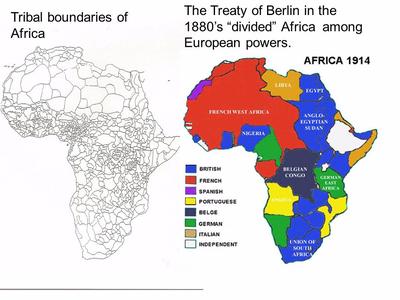 It comprised Ethiopia (annexed by Italy on May 9, 1936, and proclaimed a part of Italian East Africa June 1) together with the Italian colonies of Eritrea and Italian Somaliland (now part of Somalia). ." Italy did come to occupy Libya, Somalia, modern-day Eritrea, and later on Ethiopia briefly (although Ethiopia can boast to have had the only army to successfully repel a European force, the Adwa victory in 1896). [26] Nine Italian aircraft flew both combat and support missions during the campaign. The Road to Oran: Anglo-French Naval Relations, September 1939 July 1940. Like other European powers in the 19th century, Italy looked to Africa for potential resources, markets, and as a way to garner prestige in the international arena. [19] Relations between Italy and Menelik deteriorated over the next few years until the First Italo-Ethiopian War broke out in 1895, when Crispi ordered Italian troops into the country. In Italy itself, racism was largely absent. Substantial overviews have begun to appear quite recently: Labanca 2002 was the first detailed and comprehensive work; more recently still, Calchi Novati 2011 is more synthetic and appropriate for a somewhat broader audience in addition to historians. Spain and the Great Powers in the Twentieth Century. Mussolinis Roman Empire. However, no Italian power took an active role in the scramble for the Americas, with the notable exception of the Pope who acted as an arbiter between European colonial powers during the Renaissance.
  In November, the last organised Italian resistance ended with the fall of Gondar. Films shown to Africans were censored, lest any sign of weakness be perceived among Italians. [35] Dalmatia and Slovenia were to be directly annexed into Italy while the remainder of the Balkans was to be transformed into Italian client states. Osprey Publishing, 2001, p. 17. Archives continued to turn up, hidden in basements, for years; cataloguing and indexing were very slow; but perhaps more important, it was in no ones interest to scrutinize the colonial record in a country divided between mutually recriminating camps of fascist loyalists and communists. The colonial era concluded abruptly and mid-war, without any political or intellectual process. Gillette, Aaron. P. 152. WebItaly was the latecomer in the colonisation of Africa, becoming involved only after the Italian unification of 1870. Stands out for its critical position concerning Italians racist behavior in the colonies. Manuscript records of traders, travellers, soldiers, missionaries and diplomats in Africa.
 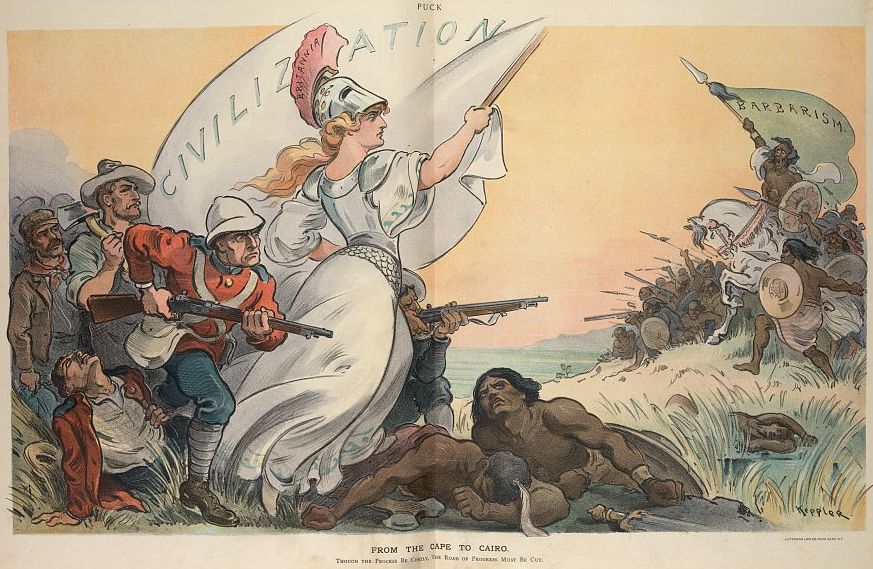 Please subscribe or login. Such classifications grew from work done in the early nineteenth century, and were based on the traditional Biblical division of peoples into the Caucasians, Semites, and Hamites, who were the descendants respectively of Japheth, Shem, and Ham, the sons of Noah. POPULATION: About 58 million On 8 September, the armistice was made public. Italy also fought in the Mahdist War, and since 1890 it defeated Mahdist troops in the Battle of Serobeti and the First Battle of Agordat. Turin, Italy: Loescher, 1973. Modern Italy. 24. The memory of this defeat would later inspire a second invasion of Ethiopia. Britain had the largest empire and the French the second largest, followed by Spain, Portugal, and Belgium. WebThe Italian colonial empire (Italian: Impero coloniale italiano), whose East African territories were known between 1936 and 1941 as The Empire (L'Impero), began in Africa in the 19th century and comprised the colonies, protectorates, concessions and dependencies of the Kingdom of Italy. Benito Mussolini ruled as dictator of Italy from 1922 to 1943. [13], The genesis of the Italian colonial empire was the purchase in 1869 of Assab Bay on the Red Sea by an Italian navigation company which intended to establish a coaling station at the time the Suez Canal was being opened to navigation. [39] Ethiopian military and civilian dead, many of them from Italian bomb and mustard gas attacks, were estimated as high as 275,000. In 1898, in the wake of the acquisition of leased territories by Germany, Russia, Britain and France in China earlier that year, the Italian government, as a matter of national prestige and to assert Italy's great power status, demanded the cession of Sanmen Bay to serve as a coaling station. London: Zed Books. In the Scramble for Africa, Italy was not considered a key player in comparison to other major European powers. Chicago: University of Chicago Press. The Fascist journal Critica Fascista noted in 1934 that racial doctrines were not fascist, but rather a threat to fascism. The imperialism came in Italy in 800, was created after the Kingdom of Italy joined other European powers in establishing colonie overseas during the ''Scramble For Africa''. [37] This was refused by French Prime Minister douard Herriot, who was not yet sufficiently worried about the prospect of a German resurgence.[37]. London: Routledge. [30], At the concluding Treaty of Versailles in 1919, Italy received less in Europe than had been promised and none overseas mandate except for a promise of colonial compensations made on 7 May 1919 during the partition of Germany's colonies between France and Britain. [22] The death toll was 6,889, including 4,133 Italians. The imperialism came in Italy in 800, was created after the Kingdom of Italy joined other European powers in establishing colonie overseas during the ''Scramble For Africa''. People of mixed Italian-Jewish background who did not practice Judaism as a religion were considered to be Italian, and not in a separate category of Jewish. Religion was more important than race or national origin. Modern Italy. Colony of Somalia. In October 1940, Mussolini ordered the invasion of Greece from Albania, but the operation was unsuccessful. Pp. Paris: Socit ddition denseignement suprieur, 1968. The European empires that invaded Africa saw colonization as a way to exploit forced labor, extract resources and become more powerful in relation to other European empires. In a perfect colonial city, the destruction of bugs and the disinfection of clothing must be carried out in a totalitarian fashion (Bosworth 2006). The aim of Italian policy, which cannot have, and does not have continental objectives of a European territorial nature except Albania, is first of all to break the bars of this prison Once the bars are broken, Italian policy can only have one motto to march to the oceans. Imperialism in Africa is an important topic in world history. Dalmatia was a strategic region during World War I that both Italy and Serbia intended to seize from Austria-Hungary. Bologna, Italy: Il Mulino, 2002. RELIGION: Roman Catholic; small numbers of Prot, Nationalist movement in 19th-century Italy culminating in the unification of the country by 1870. Berkeley: University of California Press. One working-class Italian was quoted as saying that the Fascist regime would have been better off first to think about civilizing the Italians before trying to civilize Africans. One of the last remaining areas open to colonisation was on the African continent. (March 20, 2023). Santi Corvaja, Robert L. Miller. [3] In June 1917, Italy proclaimed central and southern Albania as a protectorate of Italy while Northern Albania was allocated to the states of Serbia and Montenegro. It lost all its colonial territories in the course of the Second World War, starting in East Africa in 1941, continuing in Libya in 1943, and finally with the fall of fascism and surrender. . Official loss of colonial rights came with treaties formalized by Italys new government in 1947. The Italian government developed a centralised administration with the aim of sending Italians to live in the colonies. In 1651, Giovanni Paolo Lascaris, Italian nobleman and Grand Master of the Knights Hospitaller of Malta (at the time a vassal state of the Kingdom of Sicily), possessed four Caribbean islands: Saint Christopher, Saint Martin, Saint Barthlemy, and Saint Croix, which were colonized from 1651 until 1665. ", "Italy's African Dream. [3] However, in 1920, an Albanian rebellion led the Italians to agree to return the occupied regions to Albania, with the exception of Sazan Island. For other uses, see, "New Roman Empire" redirects here. By this time other European countries had already claimed most parts of Africa.
  Useful as an introduction and a reference, thanks to its bibliographic appendix. On 7 May, the surrender of Axis forces in Tunisia and other near continuous Italian reversals, led King Victor Emmanuel III to plan the removal of Mussolini. This loss instigated competitive motivations, leading to Italys first military colonial occupation, in 1885, of Massawa (Mitsiwa, Massaua), also on the Red Sea, and eventually to the establishment of Italys first colony, Eritrea, in 1890. Italy began its invasion of Libya in 1911, and succeeded in driving out the Turks, who controlled the territory, in 1912. WebItalian East Africa, Italian Africa Orientale Italiana, group of Italian possessions in eastern Africa in the period 193641. Modern Italy. Only after France seized Tunis from the Ottoman Empire in 1882, however, did Italians expansionist sentiment truly flourish. Italians, including Fascists, generally did not approve of Nazi doctrines, thinking them crude, pagan, brutal, and unprincipled. The Italian press supported the move, noting that Corfu had been a Venetian possession for four hundred years. His political philosophy, which he called fascism, was based on the, Africa, Modern U.S. Security Policy and Interventions, African American Catholics in the United States (History of), African American Newspapers and Periodicals, https://www.encyclopedia.com/social-sciences/encyclopedias-almanacs-transcripts-and-maps/africa-italian-colonies. In 1939, Italy invaded and captured Albania and made it a part of the Italian Empire as a protectorate and separate kingdom in personal union with the Italian crown. [51] A German intervention prevented the fall of Libya and the combined Axis attacks drove the British back into Egypt until summer 1942, before being stopped at El Alamein. Part 2: Fatal Victory, 1935-6. One of the last remaining areas open to colonisation was on the African continent. This was to change, however, with the rise of Benito Mussolini and the Fascist Party, which came to power in 1922. Such an interpretation helped form racial attitudes toward black Africans, who were considered inferior and incapable of civilization. Italy, as a relative latecomer to the colonial project, acquired what many Europeans considered to be the less desirable territories in Africa, including Eritrea, where Italian colonization was established in 1890; Somalia, where Italian rule began in 1905; and Libya, where Italian rule commenced in 1912. Part of this feeling, among some Italians, included a desire to acquire overseas coloniesas other European countries were doingand to relive the glories of the Roman Empire. Combines essential short primary texts with a synthetic outline of events and topics, making it the best medium-length introduction. During the Second World War (19391945), Italy occupied British Somaliland, parts of south-eastern France, western Egypt and most of Greece, but then lost those conquests and its African colonies, including Ethiopia, to the invading allied forces by 1943.
  Within the Cite this article tool, pick a style to see how all available information looks when formatted according to that style. WebItalian East Africa (Italian: Africa Orientale Italiana, AOI) was an Italian colony in the Horn of Africa. In April 1920, it was agreed between the British and Italian foreign ministers that Jubaland would be Italy's first compensation from Britain, but London held back on the deal for several years, aiming to use it as leverage to force Italy to cede the Dodecanese to Greece.[31]. For more information or to contact an Oxford Sales Representative click here.
  For example, the conquest of Libyasometimes called the Fourth Shore of Italywas lengthy and oppressive. Italys colonial experience forced Italians to confront the presence of non-Europeans within the Italian Empire. It did not consider annexing it until 1879, when it became apparent that Britain and Germany were encouraging France to add it to its colonial holdings in North Africa. They nevertheless perpetuated the argument that black Africans were an inferior people, but that the peoples of Libya, Eritrea, Ethiopia, and Somalia, being of Semitic background (with some Hamitic or African admixture), were capable of civilization. 2023